
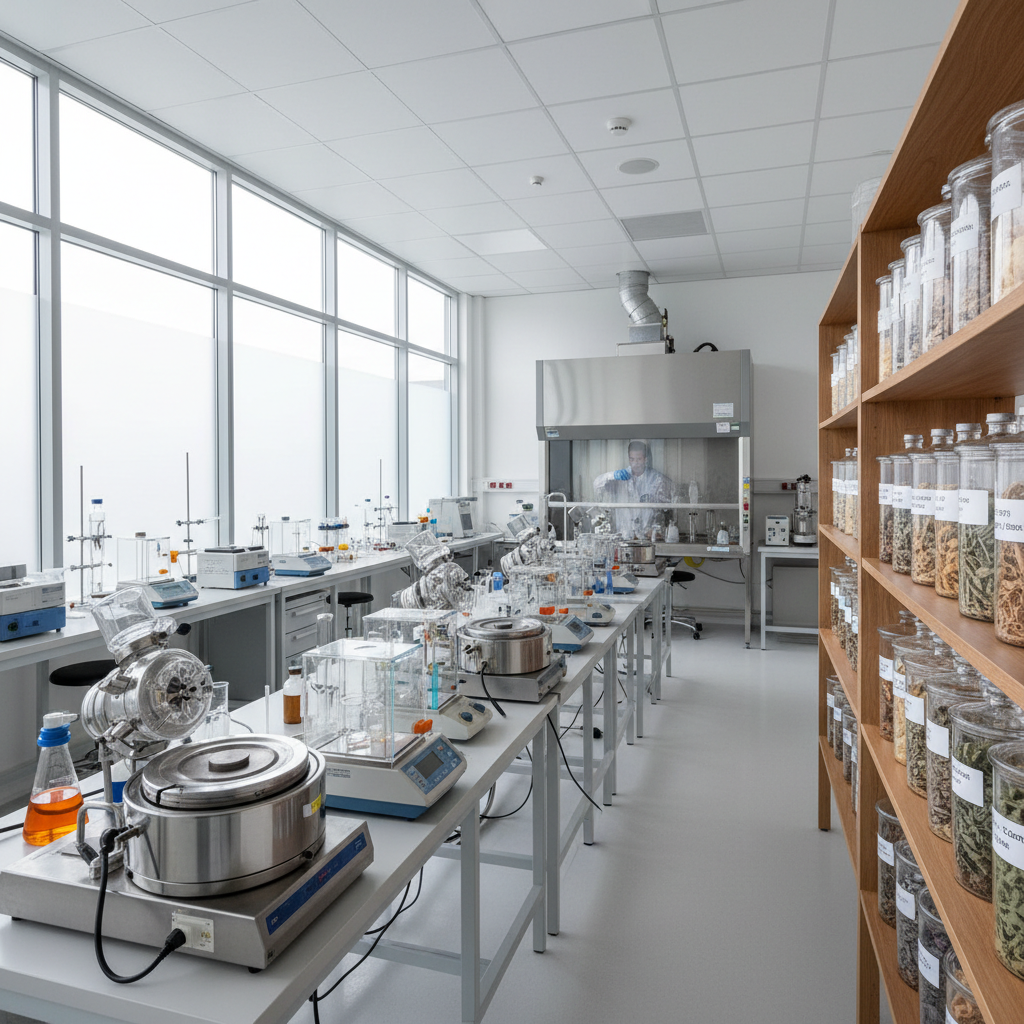
AI and Machine Learning in Drug Discovery: From Target Identification to Lead Optimization
How artificial intelligence is shortening discovery timelines and improving candidate quality.
This white paper examines how machine learning models are applied across drug discovery, including target identification, virtual screening, ADMET prediction and generative design of novel molecules.
Artificial intelligence and machine learning are changing how drug discovery teams identify targets, design molecules and prioritize candidates. Traditional discovery can take many years and cost billions of dollars, with high attrition at every stage. By learning from large biological and chemical datasets, machine learning models can narrow the search space, predict properties earlier and suggest novel structures that human intuition might overlook. This white paper explains where AI delivers value across the discovery pipeline and what is needed to apply it responsibly.
The Drug Discovery Challenge and the Role of AI
Discovery begins with understanding disease biology and selecting a target, proceeds through hit finding and lead optimization, and ends with a preclinical candidate that must be potent, selective, safe and manufacturable. Most programs fail, often because early assumptions about target relevance or compound properties prove wrong. AI does not remove biological uncertainty, but it can improve the odds by making better use of existing data and by accelerating design-make-test-analyze cycles.
Types of Models Used
Supervised learning predicts properties such as activity or solubility from labeled examples. Unsupervised methods find structure in unlabeled data, for example clustering patient subtypes. Deep learning architectures, including graph neural networks for molecules and transformer models for sequences, capture complex relationships. Generative models propose new molecules or protein sequences that satisfy specified criteria.
Target Identification and Validation
Mining Multi-Omics and Clinical Data
Machine learning integrates genomics, transcriptomics, proteomics and clinical records to identify genes and pathways associated with disease. Knowledge graphs link genes, diseases, compounds and literature, allowing models to surface non-obvious relationships. Human genetic evidence, which has been shown to increase the likelihood of clinical success, can be systematically incorporated into target ranking.
Prioritizing Targets
Models can score targets on factors such as genetic support, tractability, expression in relevant tissues, safety liabilities and competitive landscape. This structured prioritization helps teams focus resources on targets with the strongest biological rationale.
Phenotypic Screening
High-content imaging combined with deep learning extracts subtle phenotypic signatures from cells treated with compounds. These signatures can reveal mechanisms of action and identify hits in complex disease models without requiring a predefined target.
Virtual Screening and Molecular Design
Structure-Based and Ligand-Based Methods
When a protein structure is available, docking and scoring methods augmented by machine learning rank candidate binders. Advances in protein structure prediction have expanded the set of targets for which reliable structural models exist. Ligand-based models use known actives to find similar compounds in large virtual libraries containing billions of molecules.
Generative Chemistry
Generative models can design novel scaffolds optimized for multiple objectives simultaneously, such as potency, selectivity, metabolic stability and synthetic accessibility. Integrating retrosynthesis prediction helps ensure that proposed molecules can actually be made. Human medicinal chemists remain essential for judging chemical sense and prioritizing designs.
Biologics and Protein Design
For antibodies and other biologics, models predict binding, developability and immunogenicity, and design sequences with improved affinity or stability. This shortens engineering cycles that previously relied on extensive library screening.
ADMET Prediction and Attrition Reduction
Poor absorption, distribution, metabolism, excretion and toxicity properties account for a large share of late-stage failures. Machine learning models trained on historical assays predict properties such as permeability, clearance, hERG inhibition and hepatotoxicity, allowing weak candidates to be removed before expensive experiments.
- •Earlier de-prioritization of compounds with likely liabilities
- •Multi-parameter optimization balancing potency with drug-like properties
- •Reduced animal testing through improved in silico predictions
Data Quality, Validation and Governance
The Importance of Data
Model performance is limited by data quality. Training sets must be curated, standardized and representative of the chemical and biological space where predictions will be used. Bias in historical data, for example overrepresentation of certain chemotypes, can lead to overconfident predictions outside the domain of applicability.
Experimental Validation Loops
The most effective AI programs close the loop between prediction and experiment. Compounds proposed by models are synthesized and tested, and the new results are fed back to retrain and improve the models. Active learning strategies choose experiments that are most informative, accelerating improvement.
Explainability and Trust
Scientists are more likely to act on predictions they can interpret. Techniques that highlight which features drive a prediction, together with uncertainty estimates, help teams judge when to trust a model and when to seek further data.
Operational and Organizational Considerations
Successful adoption requires multidisciplinary teams that combine biology, chemistry, data science and software engineering. Data infrastructure, including harmonized assay data, metadata standards and secure computing, is a prerequisite. Intellectual property considerations arise when models are trained on proprietary and public data, and when AI-generated structures are patented. Regulators are also developing expectations for the use of AI in submissions, emphasizing transparency and validation.
Realistic Expectations
AI is a powerful tool but not a guarantee. Biology remains complex, and many failures stem from factors that models cannot yet predict, such as human-specific toxicity or heterogeneity in patient response. Organizations should set measurable goals, benchmark models against conventional approaches and expand use cases progressively.
Conclusion
AI and machine learning are becoming integral to drug discovery, improving target selection, accelerating molecular design and reducing attrition through better property prediction. By investing in high-quality data, tight experimental feedback loops and cross-disciplinary collaboration, discovery organizations can translate algorithmic promise into tangible pipeline progress.
Download This White Paper
Biotechnology Media Insights
Continue to Biotechnology Media Insights to access this white paper.