
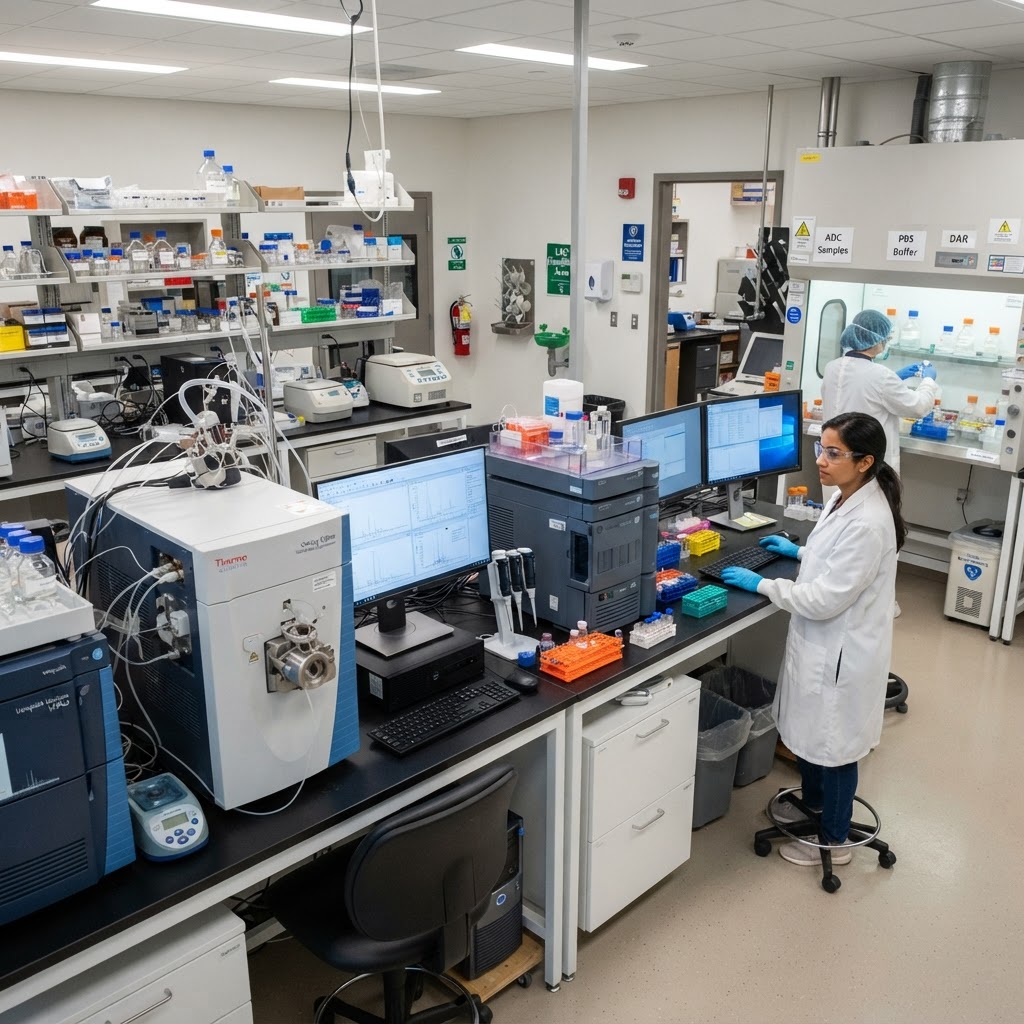
Solubility Enhancement Technologies: Amorphous Solid Dispersions and Beyond
Selecting the right enabling formulation for poorly soluble drug candidates.
A practical overview of solubility enhancement approaches including spray-dried dispersions, hot melt extrusion, lipid-based systems and nanosuspensions, with guidance on technology selection.
A large share of new chemical entities emerging from modern discovery programs show poor aqueous solubility. Estimates commonly suggest that around 70 percent of development candidates and a significant proportion of marketed oral drugs fall into low-solubility categories. Because a drug must dissolve before it can be absorbed, poor solubility often translates into low and variable bioavailability, food effects and difficulty achieving therapeutic exposure. This white paper provides a practical overview of solubility enhancement approaches, including amorphous solid dispersions, spray drying, hot melt extrusion, lipid-based systems and nanosuspensions, with guidance on selecting the right technology for a given candidate.
The Solubility Challenge in Modern Drug Development
Bioavailability of an oral drug depends on solubility, dissolution rate and permeability. The Biopharmaceutics Classification System (BCS) groups compounds accordingly: BCS Class II compounds have low solubility and high permeability, while Class IV compounds have low solubility and low permeability. Class II candidates are the most common target for enabling formulations because improving dissolution can unlock absorption.
Why Conventional Formulation Falls Short
Simple approaches such as particle size reduction by micronization, salt formation or pH adjustment can help in some cases but are limited. Salt formation requires an ionizable group, and micronization improves dissolution rate but does not change equilibrium solubility. For highly lipophilic, high-melting-point compounds, more advanced strategies are needed.
Consequences of Inadequate Solubility
- •Low and variable exposure in preclinical and clinical studies
- •Strong food effects that complicate dosing
- •Higher doses needed, increasing cost and safety risk
- •Failed or delayed programs when exposure targets cannot be reached
Amorphous Solid Dispersions
How They Work
In an amorphous solid dispersion (ASD), the drug is molecularly dispersed in a polymer matrix in a non-crystalline, high-energy state. The amorphous form has higher apparent solubility than the crystalline form and can generate supersaturation in the gastrointestinal tract. The polymer stabilizes the amorphous drug in the solid state, preventing recrystallization during storage, and often helps maintain supersaturation after dissolution, which is known as the spring-and-parachute effect.
Polymer and Drug Loading Selection
Common polymers include hydroxypropyl methylcellulose (HPMC), HPMC acetate succinate (HPMCAS), polyvinylpyrrolidone (PVP), copovidone and methacrylic acid copolymers. Selection depends on drug-polymer miscibility, glass transition temperature, hygroscopicity and ability to inhibit precipitation. Higher drug loading reduces dosage form size but increases risk of physical instability. Screening using small amounts of material, solubility parameter calculations and thermal analysis speeds early selection.
Physical Stability
The main risk is crystallization over shelf life, which would negate the solubility advantage. Stability depends on storage temperature relative to the glass transition temperature, moisture uptake and drug-polymer interactions. Accelerated stability studies and modeling help predict performance. Packaging with moisture protection is often necessary.
Manufacturing Technologies for ASDs
Spray Drying
Spray drying dissolves drug and polymer in a volatile solvent, atomizes the solution into hot gas and rapidly evaporates the solvent to form particles. It suits heat-sensitive compounds and gives control over particle properties. Considerations include solvent selection, solvent recovery, residual solvent limits, secondary drying and downstream processing of the often low-density powder. It scales well from laboratory to commercial equipment.
Hot Melt Extrusion
Hot melt extrusion (HME) melts the drug and polymer in a twin-screw extruder, mixing under heat and shear to form a solid dispersion, which is then milled. It is solvent-free and continuous, attractive for sustainability and scale-up. The drug must be thermally stable at processing temperature, and plasticizers can lower required temperatures. HME also supports shaping into films and implants.
Other Methods
Co-precipitation, KinetiSol, freeze drying and electrospinning offer alternatives for particular challenges, such as very high melting point drugs or thermally labile molecules.
- •Spray drying: heat-sensitive molecules, fine particle control, solvent required
- •Hot melt extrusion: solvent-free, continuous, thermally stable drugs
- •Co-precipitation and others: specialized cases
Lipid-Based Drug Delivery Systems
Mechanism and Types
Lipid-based formulations present the drug in a pre-dissolved state, bypassing the dissolution step. They stimulate bile and pancreatic secretions, which aid solubilization, and can promote lymphatic transport. The Lipid Formulation Classification System groups them from simple oil solutions to self-emulsifying drug delivery systems (SEDDS) and self-microemulsifying systems (SMEDDS), which form fine emulsions on contact with gastrointestinal fluids.
Design Considerations
Excipient screening evaluates drug solubility in oils, surfactants and co-solvents. Digestion testing simulates lipolysis to see whether the drug precipitates as lipids are digested. Capsule compatibility, chemical stability and potential for solidification into powders or tablets influence the dosage form. Lipid systems are particularly suitable for highly lipophilic compounds with high log P.
Nanosuspensions and Particle Engineering
Nanonization
Reducing particle size to the submicron range dramatically increases surface area and dissolution velocity. Nanosuspensions are produced by wet milling or high-pressure homogenization with stabilizers that prevent aggregation. They can be delivered orally, parenterally or by other routes, and are useful when high drug loading is needed or when ASDs are unsuitable because the drug crystallizes readily.
Cocrystals and Complexation
Cocrystals combine the drug with a co-former in a crystalline lattice with improved solubility and stability. Cyclodextrin complexation encapsulates lipophilic molecules, increasing solubility, though dose is limited by the complexation capacity. These approaches expand the toolbox for challenging molecules.
Technology Selection Framework
Key Physicochemical Properties
Selection begins with understanding melting point, log P, glass transition temperature, solubility in solvents and lipids, crystallization tendency and thermal and chemical stability. A commonly used rule of thumb distinguishes "brick dust" molecules, with high melting points and strong crystal lattices, from "grease ball" molecules, with high lipophilicity. Brick dust molecules often respond to ASDs or nanosuspensions, whereas grease ball molecules are good candidates for lipid-based systems.
Dose and Target Profile
High-dose drugs challenge ASDs because of drug loading limits and tablet size. Lipid systems and nanosuspensions may suit high doses differently. The target product profile, including onset of action, food effect and patient population, further guides selection.
Decision Tree and Early Screening
A structured decision tree, supported by miniaturized screening that uses only milligram quantities, narrows options quickly. Parallel evaluation of two or three approaches de-risks development. Early in vivo pharmacokinetic studies in animal models compare formulations and inform scale-up. Avoiding late-stage reformulation saves time and cost.
- •Characterize the molecule thoroughly before selecting an approach
- •Screen multiple technologies in parallel at small scale
- •Confirm performance with dissolution and pharmacokinetic studies
- •Consider manufacturability, cost and regulatory aspects early
Analytical Characterization and Performance Testing
Solid-state characterization with X-ray powder diffraction, differential scanning calorimetry and spectroscopy confirms amorphous nature and detects crystallinity. Non-sink and biorelevant dissolution tests, using media simulating fasted and fed intestinal fluids, predict in vivo behavior better than compendial tests. Methods must be discriminating and validated, and drug-polymer miscibility is monitored over stability.
Scale-Up, Quality and Regulatory Considerations
Scale-up must preserve critical attributes such as particle size, residual solvent, bulk density and amorphous content. Quality by design approaches define critical process parameters. Regulators expect stability data demonstrating physical stability and justification of specifications, including for crystallinity. Choosing a partner experienced in the selected technology and with relevant capacity supports timelines.
Conclusion
Solubility enhancement is now a routine part of oral drug development. By understanding the molecule, screening technologies early and selecting the approach that best matches its properties and dose, developers can turn poorly soluble candidates into effective, manufacturable medicines.
Download This White Paper
Biotechnology Media Insights
Continue to Biotechnology Media Insights to access this white paper.