
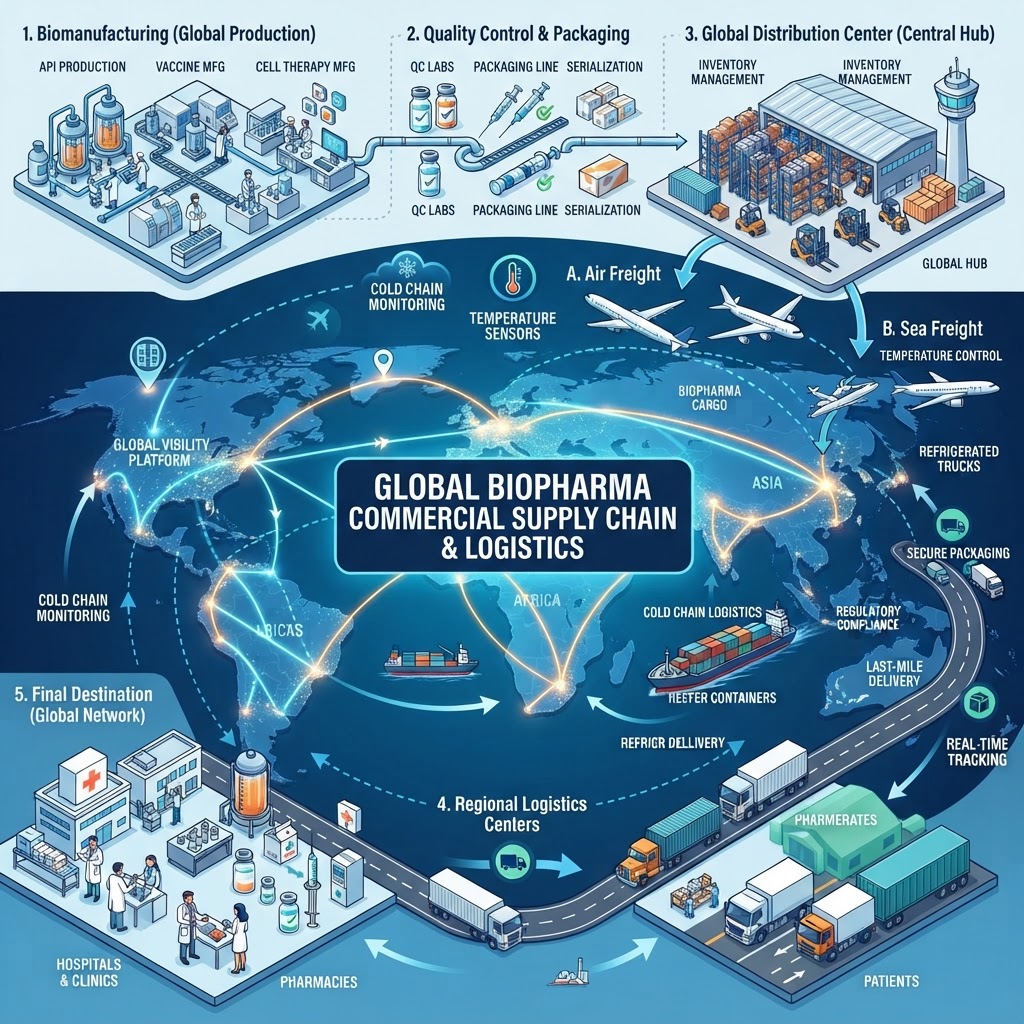
Pharmaceutical Supply Chain Resilience: Strategies for Risk Mitigation
Building visibility, redundancy and agility across global pharmaceutical supply networks.
This white paper explores how drug makers can reduce supply risk through dual sourcing, regional manufacturing, digital visibility and robust contingency planning.
Pharmaceutical supply chains are long, global and highly regulated. A single disruption, whether a supplier failure, a natural disaster, a geopolitical event or a pandemic-related lockdown, can interrupt the flow of medicines to patients. Recent years have shown how fragile supply networks can be, with shortages affecting everything from sterile injectables to common oral medications. This white paper explores practical strategies that drug makers can use to identify risk, build redundancy and respond quickly when disruptions occur.
Why Supply Chain Resilience Is a Strategic Priority
Pharmaceutical products depend on active pharmaceutical ingredients, excipients, packaging components, manufacturing capacity and distribution networks that span many countries. Concentration of API production in a few regions, reliance on single-source materials and just-in-time inventory practices have increased efficiency but also vulnerability. Regulators, payers and patients increasingly expect manufacturers to demonstrate that supply is secure.
The Cost of Disruption
Beyond lost revenue, supply interruptions can harm patients, damage reputation and trigger regulatory scrutiny. Shortages of critical medicines force clinicians to use alternatives that may be less effective or carry greater risk. Building resilience is therefore both a business and an ethical imperative.
Mapping Supply Risk
Multi-Tier Visibility
Many companies know their direct suppliers but have limited insight into sub-suppliers. Multi-tier mapping traces materials from raw inputs to finished product, revealing single points of failure, geographic concentration and shared dependencies across products. Mapping should cover APIs, key starting materials, excipients, primary packaging, devices and logistics providers.
Risk Assessment Methods
A structured risk assessment scores suppliers and materials on criticality, substitutability, financial health, regulatory compliance history, geopolitical exposure and natural hazard risk. Prioritizing the highest-risk items focuses mitigation effort where it matters most.
- •Identify materials with only one qualified source
- •Flag suppliers in regions with elevated geopolitical or climate risk
- •Assess lead times and inventory coverage for critical items
- •Monitor supplier financial and quality indicators continuously
Redundancy and Regionalization
Dual and Multiple Sourcing
Qualifying a second source of API or key materials reduces dependence on a single supplier, though regulatory filings must be updated and the alternative must be proven equivalent. The cost of qualification is often small compared with the cost of a stock-out.
Regional Manufacturing Capacity
Shifting some production closer to end markets shortens lead times and reduces exposure to long transit routes and trade restrictions. Regional hubs, supported by flexible contract manufacturing partners, allow production to be redirected when needed.
Inventory Strategy
Safety stock policies should reflect product criticality, demand variability and replenishment lead time. Strategic buffers of key materials and finished goods for essential medicines provide time to respond to disruptions.
Digital Visibility and Analytics
Track-and-Trace and Control Towers
Serialization and track-and-trace systems provide product-level visibility. Supply chain control towers aggregate data from planning, manufacturing, warehousing and transportation, giving planners a real-time view of inventory and shipments.
Predictive Analytics
Machine learning applied to demand history, supplier performance and external signals such as weather and port congestion can predict disruptions earlier. Scenario modeling tests how the network responds to different shocks.
Data Sharing with Partners
Sharing forecasts and inventory data with suppliers and contract manufacturers improves coordination and reduces the bullwhip effect, where small demand changes amplify upstream.
Contingency Planning and Governance
Scenario Exercises
Regular simulations, such as loss of a key supplier or closure of a manufacturing site, test response plans and reveal gaps. Lessons learned should be fed back into procedures.
Escalation and Decision Rights
Clear escalation paths, assigned decision-makers and defined communication protocols with regulators and customers allow fast action. Cross-functional teams from supply chain, quality, regulatory and commercial functions should be involved.
Regulatory Engagement
Early communication with health authorities about potential shortages, along with pre-approved contingency options such as alternative sites or suppliers, can accelerate response. Understanding regional requirements for shortage reporting is essential.
Quality and Compliance in a Resilient Network
Adding suppliers and sites increases the quality oversight burden. Strong quality agreements, risk-based audit programs and consistent specifications ensure that flexibility does not compromise compliance. Change control and supplier qualification must remain rigorous.
Building the Business Case
Resilience investments, such as dual sourcing and safety stock, add cost. Quantifying avoided losses, using scenario analysis and probability-weighted impact, helps justify spending. Prioritizing critical products allows targeted rather than blanket investment.
Conclusion
Resilient pharmaceutical supply chains combine visibility, redundancy, agility and sound governance. By mapping risk deeply, diversifying sources, leveraging digital tools and rehearsing responses, manufacturers can protect patients and the business against an uncertain environment.
Download This White Paper
Biotechnology Media Insights
Continue to Biotechnology Media Insights to access this white paper.