
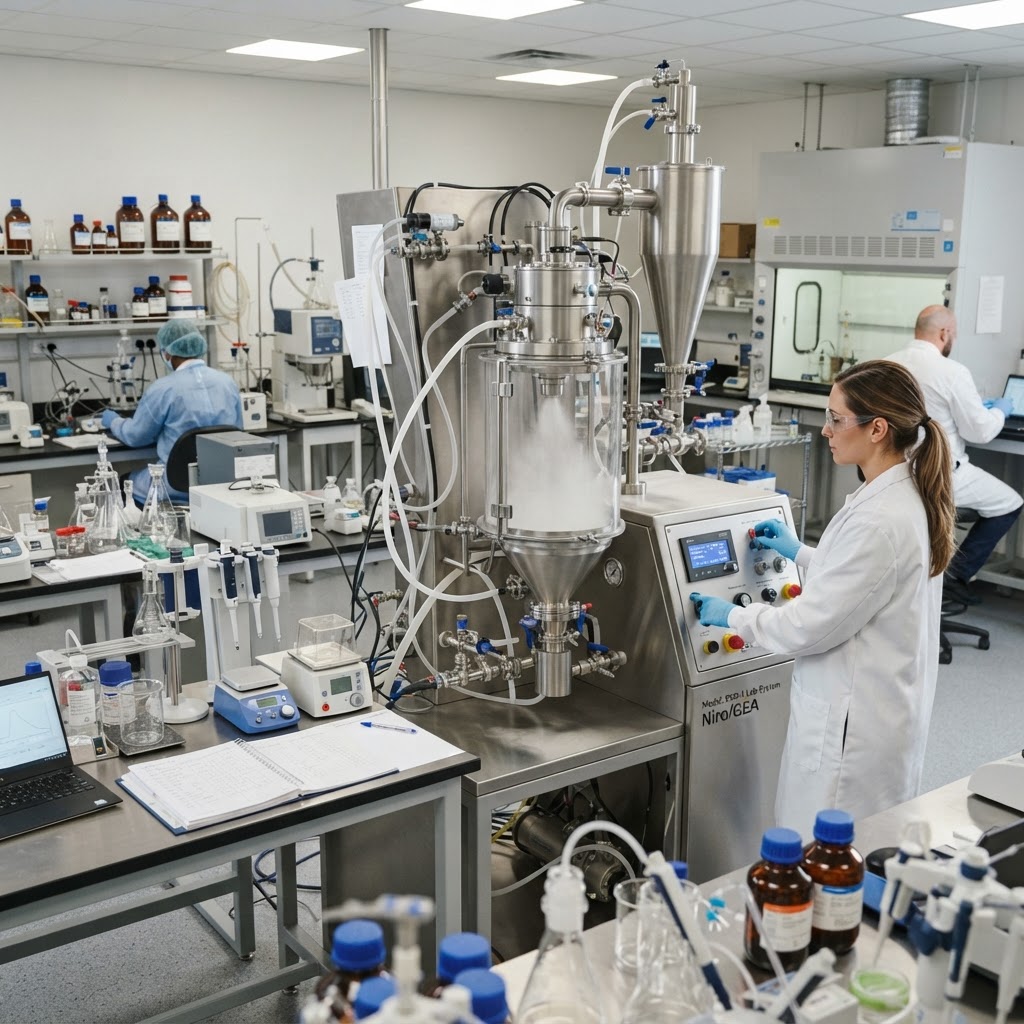
Risk Management in Potency assays and bioanalytical testing
Insights on risk identification and mitigation for teams working in bioanalytics.
This white paper explores potency assays and bioanalytical testing with a focus on risk identification and mitigation, covering key drivers, risks, enabling tools such as cell-based reporter assays and binding assays, quality expectations and a staged action plan.
Potency assays and bioanalytical testing is a defining area of bioanalytics, and organizations that control it well tend to deliver more reliable programs, faster timelines and stronger outcomes for patients. This white paper examines potency assays and bioanalytical testing through the lens of risk identification and mitigation. It draws on widely recognized industry practice to help statisticians, regulatory reviewers and bioanalytical scientists make informed decisions. The goal is to give readers a defensible risk-based framework, supported by clear definitions, practical checklists and measurable indicators of success.
The discussion is organized into focused sections: the current landscape and its drivers, the main technical and operational challenges, proven approaches and tools, quality and regulatory considerations, performance measurement, and a staged action plan. Each section is written so that it can be read on its own, yet together they form a complete framework that can be adapted to programs of different size, modality and maturity.
The Current Landscape
Over recent years, potency assays and bioanalytical testing has been reshaped by several converging forces. The most influential are assay automation, reference standard programs and complex modality testing. Together they raise expectations for speed, consistency and transparency while also increasing the complexity that teams must manage. Sponsors that once treated potency assays and bioanalytical testing as a late-stage concern now consider it from the earliest design decisions, because choices made at the bench frequently determine what is achievable at commercial scale.
Why It Matters Now
The pressure to shorten development timelines has not reduced the need for rigorous science. If anything, compressed schedules magnify the cost of rework. When potency assays and bioanalytical testing is approached reactively, teams often discover problems such as cell line drift or poor correlation with clinical activity only after significant investment has been made. A proactive approach, grounded in risk identification and mitigation, allows organizations to surface these issues early, when corrective action is least expensive.
Key Market and Technology Drivers
- •Assay automation: changes the baseline assumptions that teams use when planning potency assays and bioanalytical testing.
- •Reference standard programs: creates new opportunities but also demands new skills and supporting infrastructure.
- •Complex modality testing: raises the bar for documentation, consistency and evidence of control.
- •Cross-functional collaboration: connects statisticians and regulatory reviewers so that decisions are made with full context.
Core Challenges and Risks
Every program in potency assays and bioanalytical testing faces a recognizable set of risks. Understanding them in advance, and assigning clear ownership, is one of the most effective ways to protect timelines and budgets. The risks below appear repeatedly across projects and deserve explicit attention in any plan focused on risk identification and mitigation.
Technical Risks
Cell line drift is among the most common technical concerns. It tends to emerge when processes are transferred or scaled without a full understanding of the factors that influence performance. Poor correlation with clinical activity presents a related challenge, particularly when materials, equipment or analytical methods change between development stages. Left unmanaged, either issue can lead to delays, additional studies or reduced confidence from reviewers.
Operational and Organizational Risks
Beyond the science, high assay variability often reflects weaknesses in planning, communication or governance. Teams working on potency assays and bioanalytical testing typically span several functions and sometimes several organizations. Without a shared view of priorities, statisticians may optimize for one objective while bioanalytical scientists optimize for another. Regular joint reviews, a single source of truth for data and clearly defined decision rights reduce this friction considerably.
Common Warning Signs
- •Repeated minor deviations that point to an unaddressed root cause such as cell line drift.
- •Growing variability in invalid run rate between batches, studies or sites.
- •Delays in decision-making because data are scattered across systems or teams.
- •Late discovery of requirements that should have been captured during early planning.
Proven Approaches and Enabling Tools
Successful organizations combine sound scientific method with the right enabling technology. For potency assays and bioanalytical testing, three capabilities stand out: automated liquid handling, statistical parallelism testing and cell-based reporter assays. None of these is a silver bullet, but each addresses a recurring weakness when applied thoughtfully and supported by trained people and well-written procedures.
Applying Automated liquid handling
Automated liquid handling gives teams greater insight into how potency assays and bioanalytical testing behaves under realistic conditions. The strongest implementations begin with a clear question, such as which variables most influence invalid run rate, and then design experiments or monitoring plans to answer it. Results are captured in a form that can be reused by later programs, turning individual project knowledge into an organizational asset.
Leveraging Statistical parallelism testing
Statistical parallelism testing complements the first capability by tightening control and reducing manual effort. When integrated with existing quality systems, it shortens the time between an event and a corrective response. It also frees regulatory reviewers to focus on interpretation and improvement instead of routine data handling, which improves both morale and the quality of decisions.
Embedding Cell-based reporter assays
Cell-based reporter assays is most valuable when it is embedded early rather than added late. Early adoption allows the supporting methods, training and documentation to mature alongside the process itself. Organizations that wait until commercialization frequently find that retrofitting costs more than the original investment would have, and that regulatory questions arise that could have been answered with earlier data.
Practical Implementation Checklist
- •Define the objective and the critical success measures, including invalid run rate and transfer success.
- •Map the process or workflow and identify where cell line drift and poor correlation with clinical activity are most likely to arise.
- •Select tools such as automated liquid handling and statistical parallelism testing based on fit rather than novelty.
- •Assign an accountable owner to each risk and each action.
- •Document decisions and rationale so they can be reused and defended.
- •Review progress at defined intervals and adjust the plan using real data.
Quality and Regulatory Considerations
Regulators across major regions expect a science- and risk-based approach to potency assays and bioanalytical testing. Expectations differ in detail, but common themes appear in guidance from the FDA, EMA, MHRA and other authorities: a clear control strategy, justified specifications, reliable data and demonstrated understanding of the process or product. Programs that treat risk identification and mitigation as part of the quality system, rather than as a separate initiative, find regulatory interactions considerably smoother.
Building a Defensible Control Strategy
A defensible control strategy links what is known about potency assays and bioanalytical testing to what is measured and controlled. It explains why each control exists, what risk it mitigates and how performance is verified over time. When cell line drift is a known concern, for example, the strategy should show the specific controls that address it and the evidence that they work. This traceable logic is what reviewers and inspectors look for.
Documentation and Data Integrity
Reliable documentation underpins every claim made about potency assays and bioanalytical testing. Records should be attributable, legible, contemporaneous, original and accurate, with appropriate review and approval. Electronic systems should be validated, access should be role-based and audit trails should be reviewed routinely. Strong data governance also accelerates internal decisions, because teams trust the information in front of them.
Preparing for Inspection
Inspection readiness is a continuous state, not a last-minute project. Teams working on potency assays and bioanalytical testing benefit from periodic mock inspections, clear storyboards that explain key decisions and ready access to supporting data. Involving bioanalytical scientists in these exercises builds shared confidence and exposes gaps while there is still time to close them.
Measuring Performance and Value
What gets measured gets managed. A balanced set of indicators for potency assays and bioanalytical testing should cover quality, speed, cost and reliability. Useful starting points include invalid run rate, transfer success and assay precision. Indicators should be defined precisely, reported consistently and reviewed by people with the authority to act on what they reveal.
Selecting Meaningful Indicators
Choose a small number of indicators that genuinely reflect outcomes rather than activity. Leading indicators, such as the number of unresolved risks, help teams intervene early. Lagging indicators, such as assay precision, confirm whether those interventions worked. Together they provide a complete picture and discourage the temptation to optimize a single number at the expense of overall performance.
Using Data for Continuous Improvement
Trend analysis turns routine data into insight. Even simple run charts can reveal drift in invalid run rate long before a limit is breached. Sharing these trends openly with statisticians and regulatory reviewers creates a culture in which small problems are raised and solved quickly. Over time, this discipline yields more predictable performance and fewer unpleasant surprises.
Indicators at a Glance
- •Quality: invalid run rate
- •Reliability: transfer success
- •Efficiency: assay precision
- •Compliance: inspection and audit outcomes, together with the closure time for corrective actions
A Staged Action Plan
Translating strategy into results requires a staged plan that fits the organization's resources. The following sequence has proven effective for teams focused on potency assays and bioanalytical testing and risk identification and mitigation. It can be compressed for small programs or expanded for large, multi-site initiatives.
Stage 1: Assess
Begin with an honest baseline. Review current practice against the themes in this paper, quantify performance using invalid run rate and transfer success, and identify the gaps that matter most. Involve statisticians and regulatory reviewers early so that the assessment reflects real working conditions rather than documented procedure alone.
Stage 2: Prioritize
Rank improvement opportunities by impact and effort. Quick wins build momentum, while larger investments such as automated liquid handling or statistical parallelism testing may need business cases and phased delivery. Be explicit about dependencies, because a delay in one workstream often affects several others.
Stage 3: Execute
Run focused pilots before broad rollout. A pilot limits exposure, generates evidence and gives teams a chance to refine procedures. Track the agreed indicators, hold regular reviews and communicate results transparently so that stakeholders stay engaged and confident.
Stage 4: Sustain
Lasting improvement depends on embedding change in training, procedures and incentives. Update controlled documents, build the new practice into onboarding and revisit the plan at least annually. As complex modality testing and related forces continue to evolve, periodic reassessment keeps the approach aligned with reality.
Case-Style Illustration
Consider a mid-sized development organization that wanted to control potency assays and bioanalytical testing more effectively. Its initial review showed inconsistent invalid run rate, frequent rework linked to cell line drift and limited visibility across teams. By introducing automated liquid handling, clarifying ownership between statisticians and bioanalytical scientists, and reviewing transfer success at a monthly forum, the organization reduced avoidable rework and gained earlier warning of emerging issues. Within a few program cycles, planning became more reliable and regulatory interactions required fewer clarifications.
The lesson is not that any single tool delivers success, but that disciplined application of risk identification and mitigation, combined with clear accountability and honest measurement, compounds over time. Small, consistent improvements in potency assays and bioanalytical testing accumulate into a meaningful competitive advantage.
Conclusion
Potency assays and bioanalytical testing will continue to evolve as assay automation, reference standard programs and complex modality testing reshape expectations across bioanalytics. Organizations that invest in understanding risk, adopting suitable tools such as automated liquid handling and statistical parallelism testing, and measuring outcomes with indicators like invalid run rate are best placed to control it successfully. By following the staged approach outlined here, teams can achieve a defensible risk-based framework while protecting patients, timelines and budgets.
Readers who wish to explore related topics can browse the wider library of pharmaceutical and biotechnology white papers published by Biotechnology Media Insights, which covers manufacturing, formulation, regulatory strategy, supply chain and advanced therapies.
Download This White Paper
Biotechnology Media Insights
Continue to Biotechnology Media Insights to access this white paper.